
Science Explorer (SciX)
Search 30M+ astronomy, physics, and Earth science papers.
Upvotes
0
Pricing
Free
Category
Research & Academic Tools
In the database since
Oct 2026
Overview
About Science Explorer (SciX)
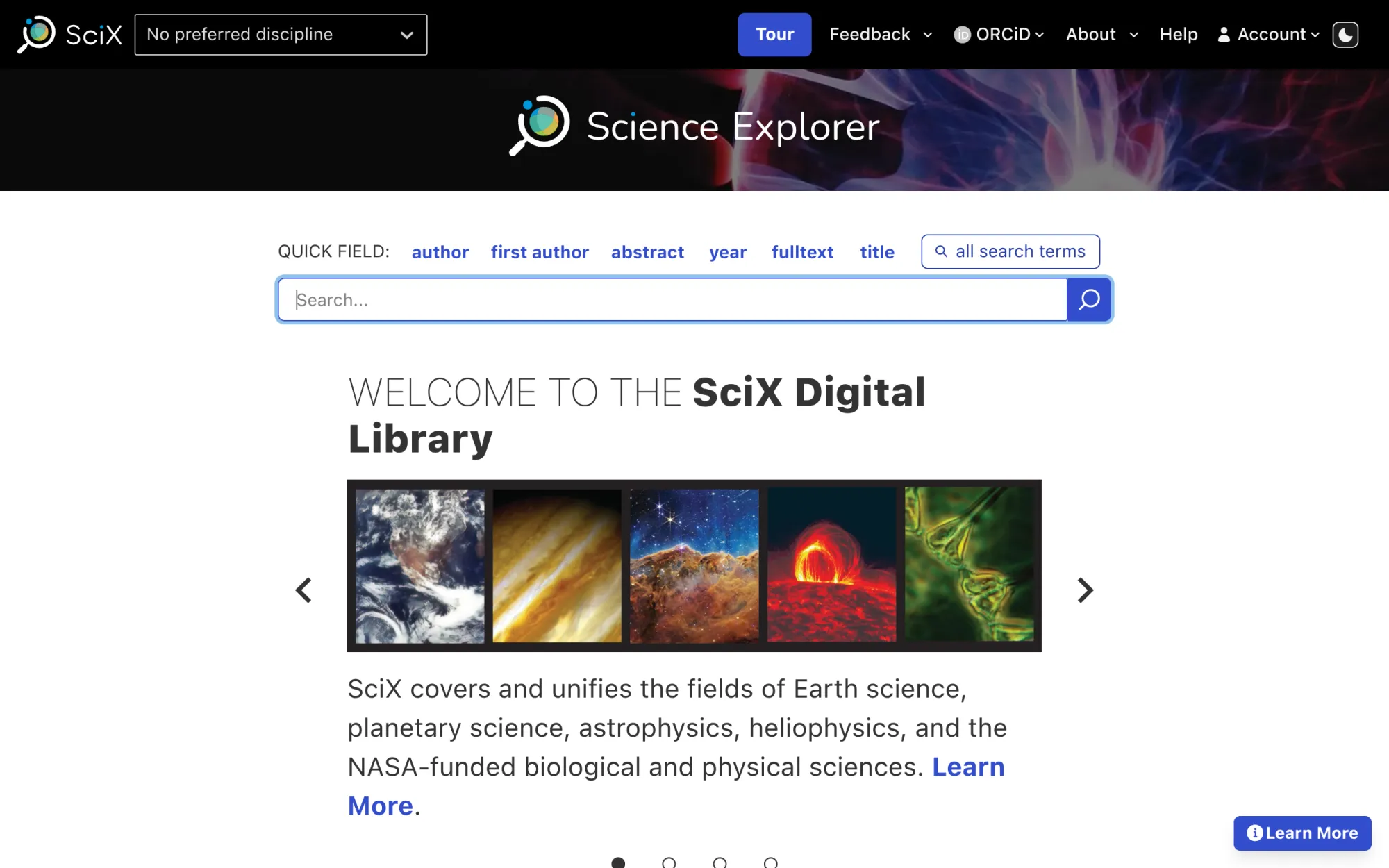
Science Explorer (SciX), formerly NASA ADS, is a free digital library for research. It covers astrophysics, planetary science, heliophysics, Earth science, and biological and physical sciences. The Astrophysics Data System served astronomers for over 30 years before this new name. The Smithsonian Astrophysical Observatory runs it under a NASA agreement. SciX holds 30M+ records. They span journal papers, preprints, data, and software. It covers all refereed astronomy work. Its five fields cover space and Earth science in one place. Search needs no account. Visit scixplorer.org to search the library.
Key Features
1. 30M+ Records Across Five Fields
SciX holds 30M+ records across five fields. They are astrophysics, planetary science, heliophysics, Earth science, and biological and physical sciences.
2. Citation Tracking
Every record shows its references and the papers that cite it. The system holds 300M+ citations.
3. Free Search Without an Account
Search, read abstracts, and follow links without an account. A free account only adds libraries, alerts, and saved settings.
4. ADS Compatibility Mode
A familiar ADS-style view keeps old search habits working. Pick the Astronomy field to rank astronomy results first.
5. Export in 23 Citation Styles
Export results in BibTeX, AASTeX, EndNote, and 20 more styles. Or copy one quick citation from a result.
6. Libraries and Email Alerts
Save papers to personal libraries. Get email alerts when new work appears from a chosen author, topic, or citation.
7. Links to Data and Software
Records link to data sets, software, and projects. They come from NASA and NSF work, not just papers.
Frequently Asked Questions (FAQ)
What happened to NASA ADS?
NASA ADS became Science Explorer (SciX). The ADS site now redirects to scixplorer.org, and the same team runs it. Your ADS account, libraries, and alerts moved over unchanged.
What is Science Explorer (SciX) used for?
SciX searches research literature across five fields. They are astrophysics, planetary science, heliophysics, Earth science, and biological and physical sciences. Researchers use it to find papers, track citations, and follow new work.
Do I need an account to search SciX?
No. Searching and reading abstracts needs no account. A free account only adds saved libraries, email alerts, and personal settings.
How many records does SciX cover?
SciX holds 30M+ records. They include refereed papers and preprints from arXiv and EarthArXiv. They also cover conference abstracts, data, and software. It covers all refereed astronomy literature.
Can I use SciX the way I used ADS?
Yes. ADS Compatibility Mode and the Classic search form keep the familiar ADS layout. Choosing the Astronomy field ranks astronomy results first, as before.
Who runs Science Explorer?
The Smithsonian Astrophysical Observatory operates SciX under a NASA cooperative agreement. It is a free, open platform built on the ADS system.
Conclusion
Science Explorer carries the NASA ADS library into five fields of science. It offers 30M+ records, citation tracking, and free search. It suits astronomers, Earth scientists, and students who need trusted sources fast. No account is needed to start searching. Set up alerts for your topics. Check scixplorer.org for the latest records and features today.
Keep exploring
Similar AI tools
Ranked by the job they do, their capabilities, and how closely they fit this workflow.