Upvotes
0
Pricing
Open Source
Category
3D Tools
In the database since
Oct 2026
Overview
About Wonder3D
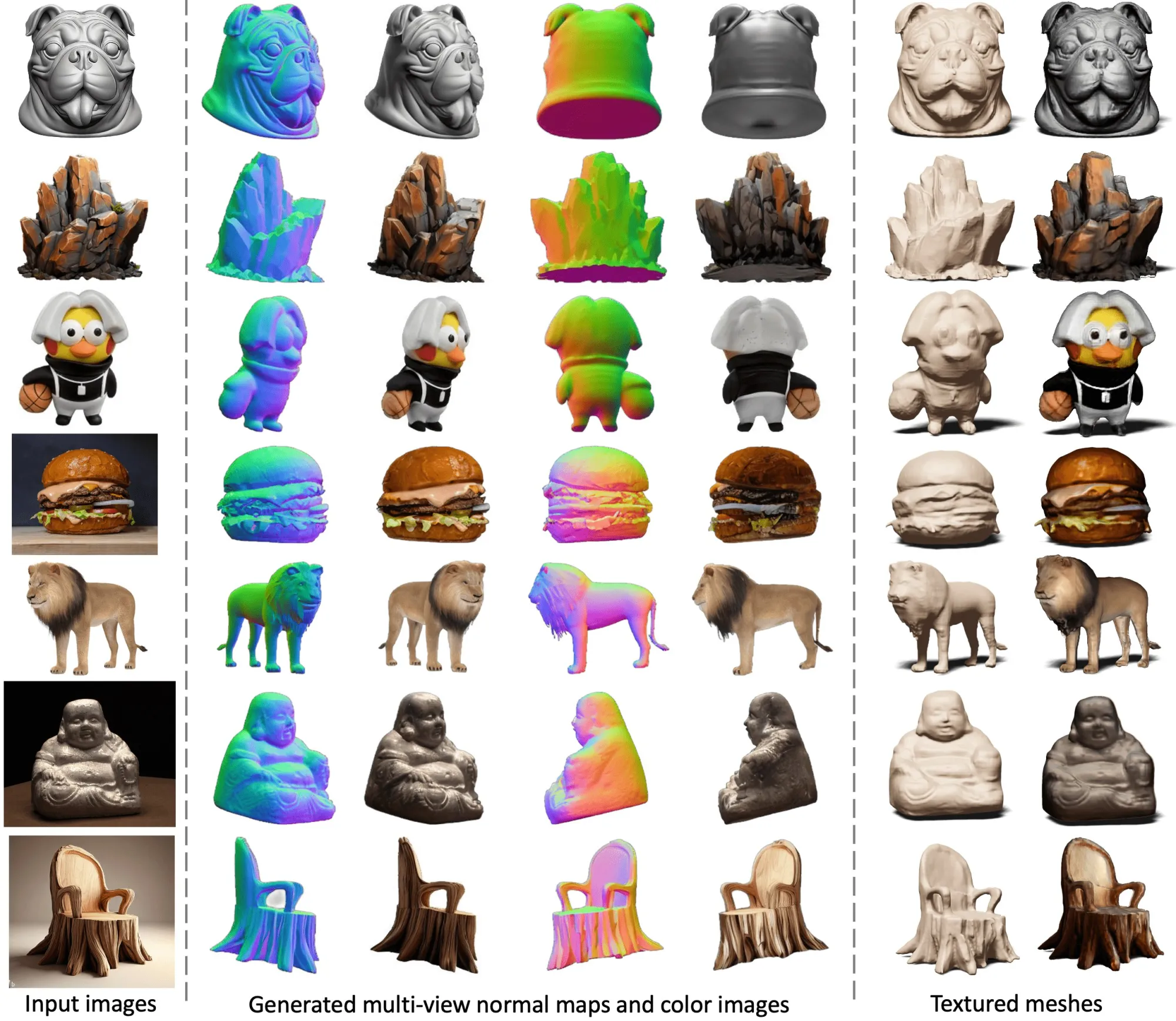
Wonder3D is an open-source method that rebuilds a detailed textured mesh from a single image in two to three minutes. It comes from HKU researchers and was a CVPR 2024 highlight. A cross-domain diffusion model first creates six consistent multi-view normal maps and color images. A normal map is an image that encodes surface angles. Then a fusion step turns those views into the final mesh. Code is MIT-licensed on GitHub with Gradio demos. Check the repo for install steps.
Key Features
1. Cross-Domain Diffusion
One model jointly generates six multi-view normal maps and color images. Geometry and appearance stay consistent across views.
2. Normal-Fusion Reconstruction
A novel fusion method converts the multi-view normals and colors into the final mesh. Detail survives the process.
3. Two to Three Minutes
A full textured mesh finishes in about two to three minutes per image. Quality is the focus over raw speed.
4. Two Extraction Backends
Pick Instant-NSR for speed or NeuS for lower memory and smoother results. Choose per your machine's limits.
5. Training Code
Two-stage training scripts and configs are released. Render code helps you prepare your own training data.
6. Gradio Demos
Two Gradio apps cover multi-view preview and full reconstruction. Try the pipeline without writing code.
Frequently Asked Questions (FAQ)
How long does one model take?
About two to three minutes per image, per the README.
Why does my result look distorted?
The method assumes an orthographic camera. Front-facing photos work best; strong lens perspective can distort results.
What input preparation is needed?
A foreground mask is required. Mask quality strongly affects the mesh, so use a clean cutout.
What are the resolution limits?
Six views at 256x256. The FAQ lists this as a current limitation.
Is there a newer version?
Yes. Wonder3D++ was released as a more advanced successor branch.
Conclusion
Wonder3D brings high-detail, open-source image-to-3D through normal-map fusion. Multi-view consistency and two extraction backends suit quality-focused research. It needs a foreground mask and a few minutes per model. The MIT license keeps it free to use. Try the Gradio demos before setting up locally. A successor branch, Wonder3D++, offers further gains. Check the GitHub repo for demos and training code.
Keep exploring
Similar AI tools
Ranked by the job they do, their capabilities, and how closely they fit this workflow.