Upvotes
0
Pricing
Freemium
Category
Text-to-Speech
In the database since
Oct 2026
Overview
About Fish Audio
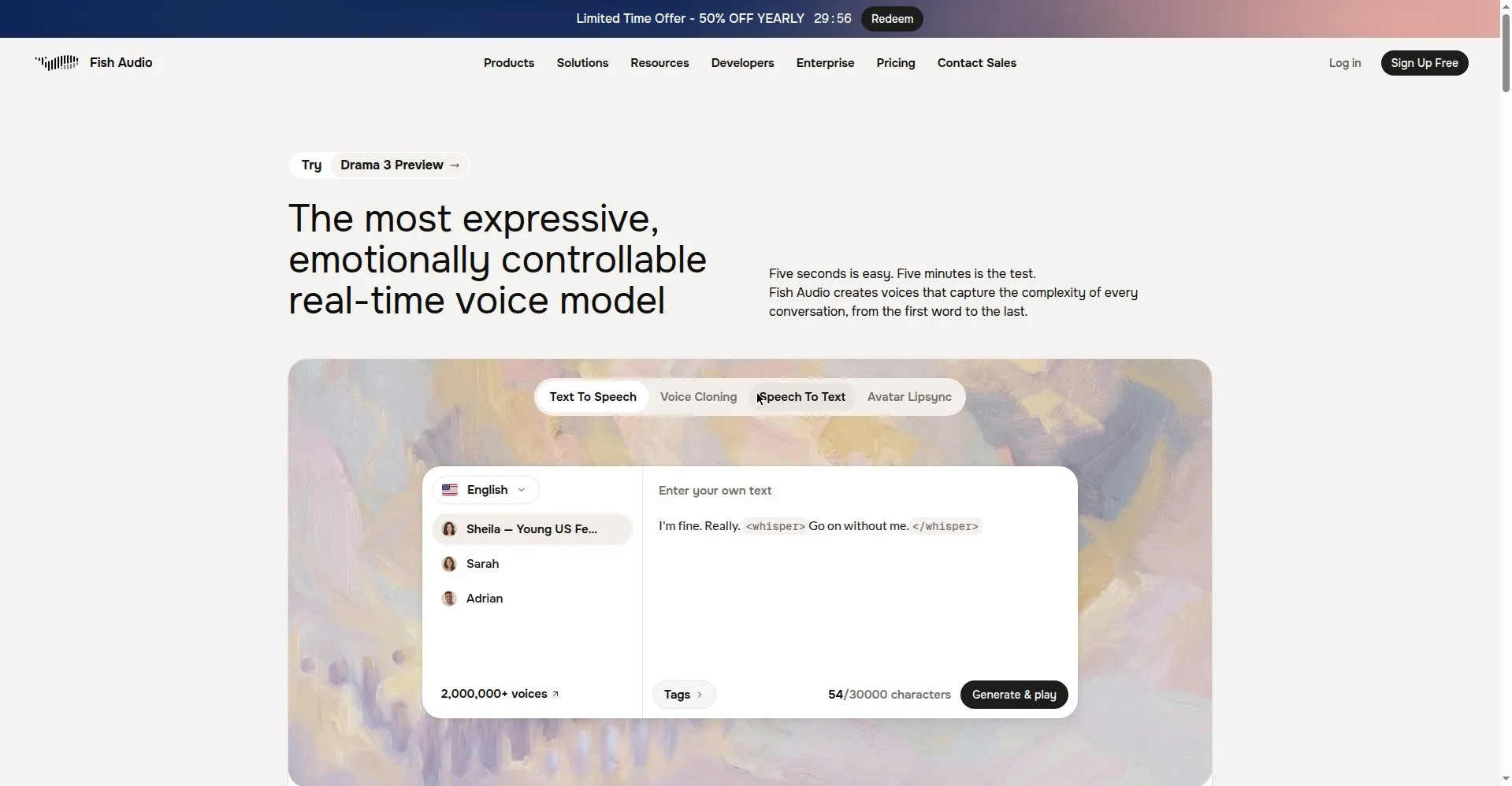
Direct the performance, not just the words. Fish Audio is a voice AI platform built around expressiveness: its S2 models treat emotion as something you script, with 64+ inline tags for whispering, laughing, pausing, sighing, and more deliveries. You can clone voices from short reference clips, browse a community library of over two million voices, and generate speech in 83 languages. Fish Audio also offers a pay-as-you-go developer API, speech-to-text on the same platform, and open-source Fish Speech models for those who would rather self-host.
Key Features
64+ Expression Tags
Script emotions, tones, and sound cues directly into your text, so a whisper, a laugh, or a pause lands exactly where you wrote it.
15-Second Voice Cloning
Create a custom voice model from a short reference clip. About 15 seconds of clean audio is enough to capture tone, accent, and speaking style.
83 Languages
Generate natural speech across 83 languages through a single endpoint, with native multi-speaker support for dialogue, dubbing, and multilingual projects.
Community Voice Library
Choose from over two million shared voices in the public catalog. Paid plans add private slots for voices you would rather keep to yourself.
Developer API
A pay-as-you-go REST and WebSocket API with streaming, official Python and JavaScript libraries, and fine prosody controls — no subscription required.
Speech-to-Text Included
Transcribe audio on the same platform and API. Synthesis, voice cloning, and transcription share one account, one dashboard, and one billing setup.
Open-Source Models
The Fish Speech models underneath are open weights, so teams with strict privacy or infrastructure needs can self-host the entire stack.
Frequently Asked Questions
How do emotion tags work?
You write tags like (whisper) or (laugh) inline with the script, and the model performs that delivery at that exact point. There is no separate settings panel or SSML to learn.
How much audio do I need to clone a voice?
About 10 to 15 seconds of clean reference audio is enough. Fish Audio requires the speaker's consent, and cloned voices carry usage rights you must respect.
What is the difference between the web plans and the API?
The web plans (Free, Plus, Pro, Max) are credit-based and aimed at creators. The developer API bills separately by text volume with no subscription, and a free fair-use route exists for testing and small projects.
Can I use voices commercially?
Commercial use starts on paid plans, and only with proper rights to the voice. The free tier is limited to personal, non-commercial use.
Is there an API?
Yes. Fish Audio offers a pay-as-you-go REST and WebSocket API with real-time streaming, official Python and JavaScript libraries, and detailed prosody controls.
Can I self-host?
Yes. The open-source Fish Speech models can be deployed on your own hardware, which suits teams with strict privacy or latency requirements.
Conclusion
Fish Audio's contribution is treating voice direction as a first-class input. By making expressiveness scriptable — and keeping the underlying models open — it gave creators and developers the same thing: a voice that performs instead of merely reading. For dubbing, games, audiobooks, and voice agents, fifteen seconds of reference audio becomes any voice you need, in 83 languages.
Keep exploring
Similar AI tools
Ranked by the job they do, their capabilities, and how closely they fit this workflow.