

Upvotes
0
Pricing
Open Source
Category
Research
In the database since
Oct 2026
Overview
About OLMo
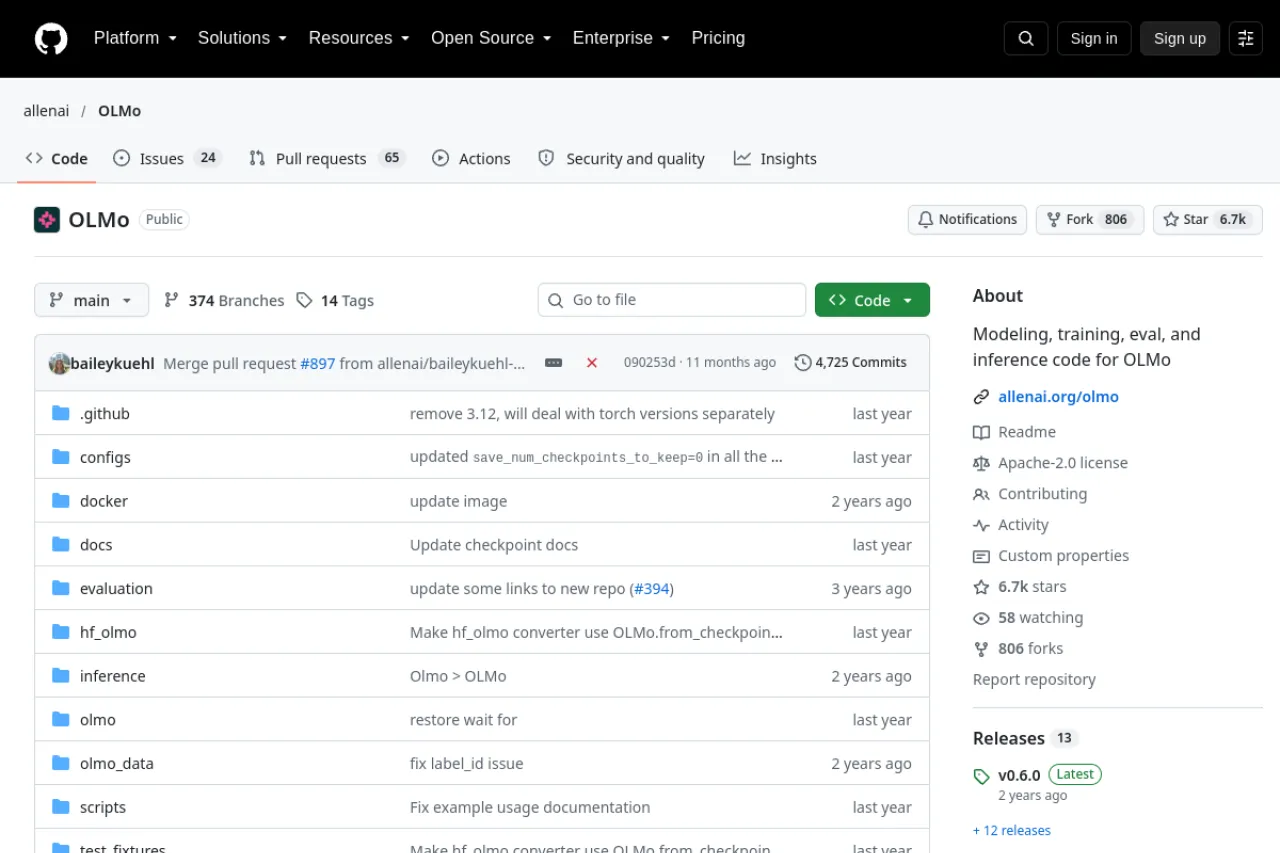
OLMo is a fully open language model from the Allen Institute for AI (AI2). Fully open means they released not just the model weights, but also the training data, code, and training details. This lets researchers study and repeat every step of how the model was made. It is made for scientists and developers who want true transparency in AI. The project is open under the Apache 2.0 license. Check the official GitHub repo for the models, data, and papers.
Key Features
1. Open training data
The Dolma dataset behind OLMo is public, so you can see exactly what it learned from.
2. Open code
All training and testing code is shared, so every step can be checked and repeated.
3. Open weights
The finished model weights are openly shared for download, ready for research and building work.
4. Research papers
AI2 publishes research papers alongside the models, so the science behind them stays fully clear.
5. Apache 2.0
The permissive license lets you use, change, and build on the work as you like.
Frequently Asked Questions (FAQ)
What is OLMo used for?
Researchers use it to study how language models are trained. Developers can also build apps on its open weights.
What does fully open mean?
It means the data, code, weights, and training details are all public. You can repeat the whole training process yourself.
Who built OLMo?
The Allen Institute for AI (AI2), a nonprofit research institute, builds and releases the OLMo models.
How is OLMo different from Llama?
Llama shares weights and code but not its training data. OLMo shares everything, including the data, for full transparency.
Can I use OLMo commercially?
Yes. The Apache 2.0 license allows commercial use and changes. Read the license text for the exact terms.
Conclusion
OLMo sets the bar for open AI by sharing data, code, and weights together. It suits researchers who need full transparency and developers who want open models. The Apache 2.0 license invites wide use. Start with the papers to understand the full method. Check the official GitHub repo for models, the Dolma dataset, and papers.
Keep exploring
Similar AI tools
Ranked by the job they do, their capabilities, and how closely they fit this workflow.