Finding the right papers is the slow part of any literature review. A literature review is the section of a paper or thesis where you find, read, and compare what other researchers have already published on your topic. The best ai tools for literature review work does not write that section for you. It helps you find papers faster, screen out the weak ones, and pull the key facts into one place. Quick Answer: Elicit is the best overall pick for a full review, because it can screen thousands of papers and build a data table from them. Consensus is the runner-up — it is the fastest way to get a cited answer to one clear science question.
No single tool wins every job, because a literature review has stages. First you discover papers. Then you screen them and extract the facts. Then you read the hard ones, check that the claims still hold up, and write it all up. The eight tools below each own one stage, and many researchers use two or three of them together. Pick by the job in front of you, not by brand name.
How we checked
We read the official website and pricing page of all eight tools and wrote down what each one does, what its free plan includes, and its starting paid price. Where a site shows both monthly and yearly billing, we quote the billed-annually figure. What we did not do: we did not run accuracy tests on the AI answers, and we publish no scores we cannot back up. All eight tools showed their plan prices on their official pages during our check.
Comparison: the 8 tools at a glance
| Tool | Free plan | Best for | Paid from |
|---|---|---|---|
| Elicit | Yes — unlimited search and summaries on the Basic plan | Systematic reviews and data extraction | $11 per user/month, billed annually |
| Consensus | Yes — unlimited searches, 10 Pro messages a month | Quick evidence-based answers | $12/month, billed annually |
| Scite | No free plan — 7-day free trial | Checking if a claim is supported or contradicted | $12/month, billed annually |
| SciSpace | Yes — Basic plan with 100 Agent credits a month | Reading and understanding dense papers | $12/month, billed annually |
| ResearchRabbit | Yes — free forever, up to 50 seed papers | Visual discovery from a few key papers | $10/month, billed annually |
| Litmaps | Yes — 2 maps, up to 100 articles per map | Citation maps with new-paper alerts | $10/month, billed annually |
| Semantic Scholar | Yes — fully free, no paid plan | Free academic search at scale | None — it is free |
| Paperpal | Yes — 200 edits a month | Writing up and pre-submission checks | £9/month, billed annually |
1. Elicit — Best for Systematic Reviews and Data Extraction
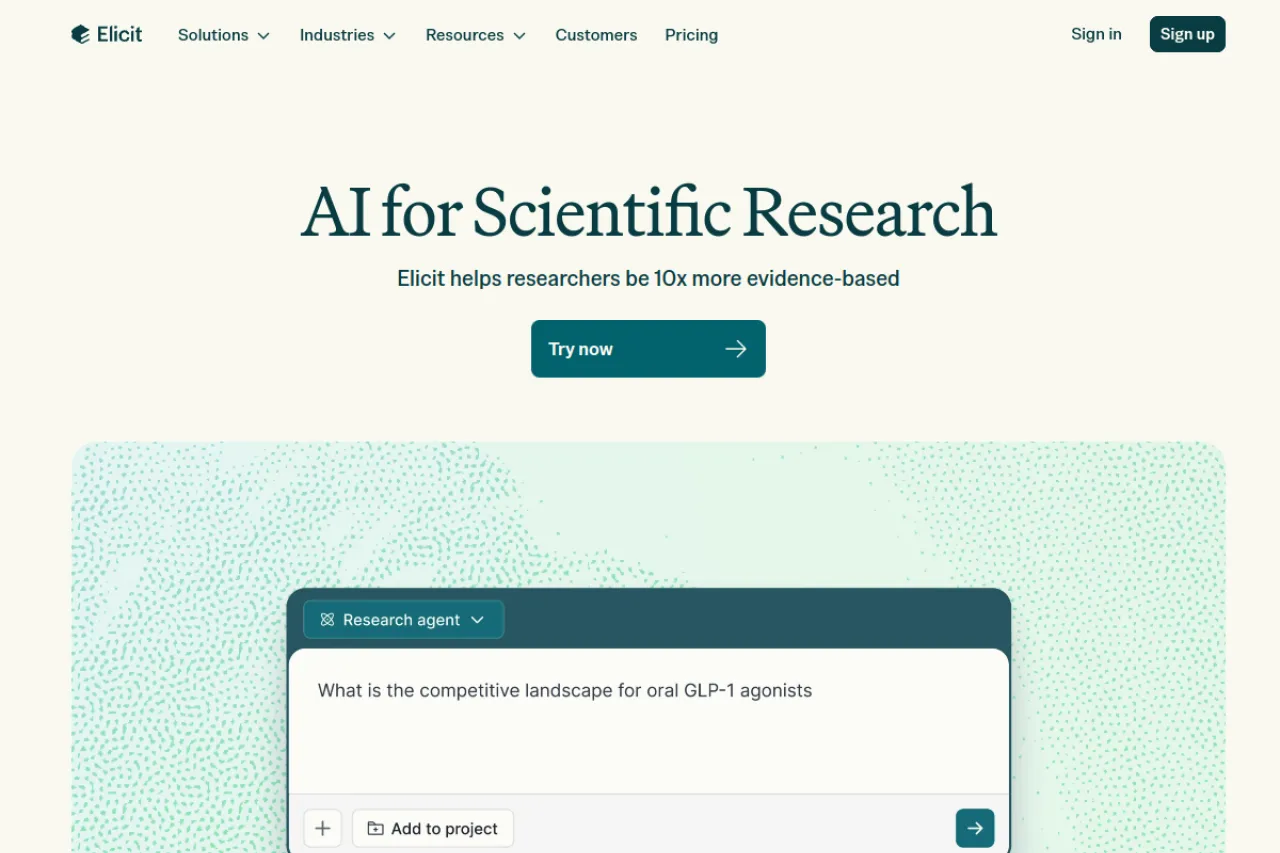
Price: Free Basic plan · Paid from $11 per user/month, billed annually
Free tier
The Basic plan is free. It gives unlimited search across more than 138 million papers, unlimited summaries, and unlimited chat with papers. Use of the Research Agent and generated Reports is limited on this plan. A systematic review is a careful review that follows fixed rules to find, screen, and compare every study on one question — and Elicit's paid plans are built for exactly that job.
Strengths
- Builds a table from many papers at once, pulling out methods, sample sizes, and results into columns you choose
- Every answer links back to the source papers, so you can check any claim yourself
- The Pro plan's systematic review workflow can screen up to 5,000 papers
- Exports to RIS, CSV, and BIB files on paid plans, ready for your reference manager
Trade-offs
- The deeper tools — more table columns, full systematic review workflows — sit on the Pro plan and above
- Extracted numbers can be wrong, so always check key figures against the original paper before you cite them
Bottom line
If your review needs a documented screening process and a tidy data table at the end, start with Elicit. It does the heavy, boring middle of a literature review better than anything else on this list.
2. Consensus — Best for Quick Evidence-Based Answers
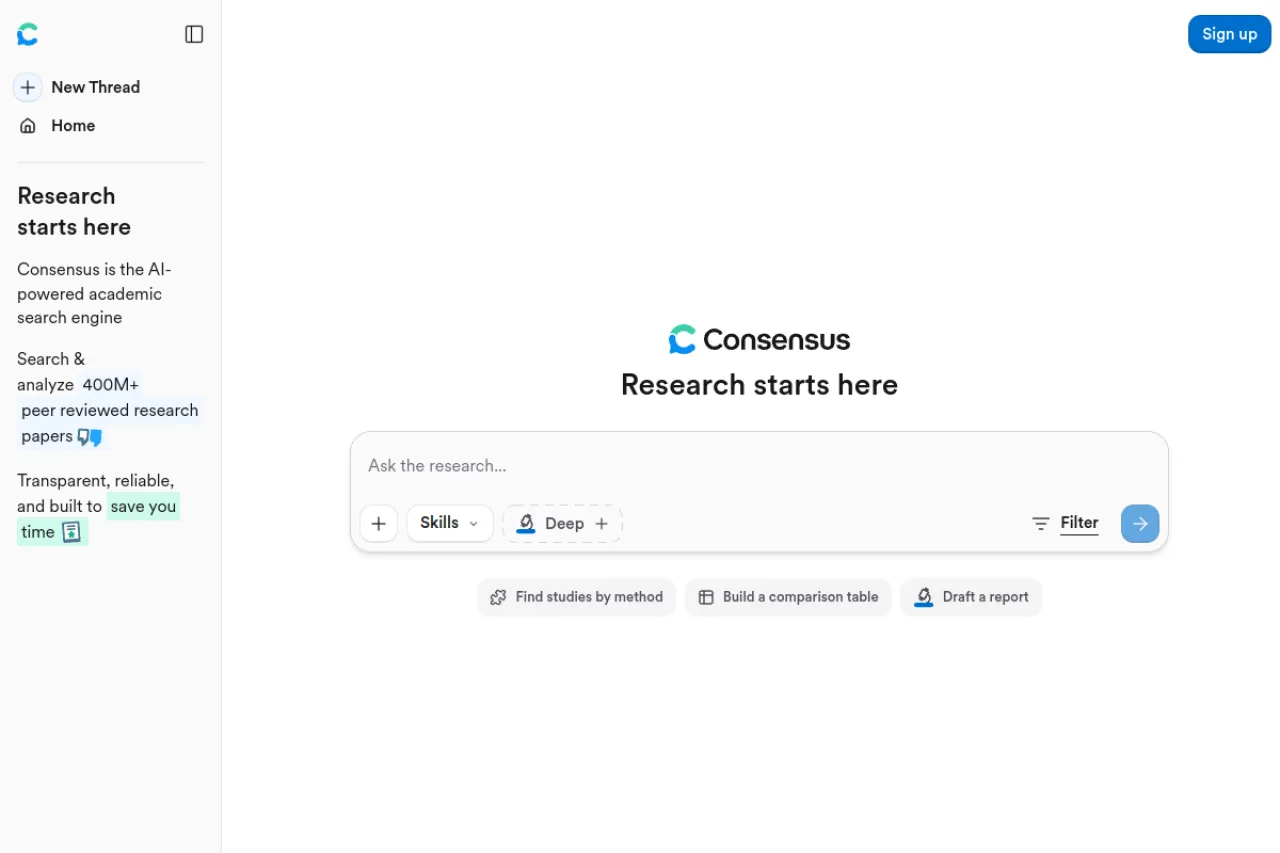
Price: Free plan · Paid from $12/month billed annually ($20 month to month)
Free tier
The free plan allows unlimited paper searches every month. It also includes 10 Pro messages, 3 Deep reviews, and 10 Study Snapshots a month. That is enough to learn the tool and answer real questions, but heavy users will use up the AI allowances quickly.
Strengths
- Ask a question in plain words and get an answer built from real papers, with citations you can open
- The Consensus Meter shows at a glance whether the papers mostly agree or disagree on a yes-or-no question
- Deep reviews pull findings from many papers into one longer answer
- Study Snapshots pull the key details out of a single paper for fast reading
Trade-offs
- It searches its own library of papers, not the open web, so topics with little published research give thin answers
- The monthly caps on Pro messages and Deep reviews apply even on some paid plans
Bottom line
Consensus is the fastest first stop when you need to know what the research says about one clear question. Use it to orient yourself, then do the deep screening in a tool like Elicit.
3. Scite — Best for Checking Whether a Claim Still Holds Up

Price: No free plan · 7-day free trial · Basic from $12/month, billed annually
Free tier
There is no free plan. New users get a 7-day free trial of the paid features. Read the fine print before you start: the official pricing page states that when the trial ends, you are automatically enrolled in the plan you selected, unless you cancel in time.
Strengths
- Smart Citations show the actual sentences where later papers cite a study, labeled as supporting, contrasting, or just mentioning it
- Lets you spot a weak or disputed source before you build your own argument on it
- The assistant's answers point back to real citation statements instead of asking you to trust the AI
Trade-offs
- No free tier, so there is no low-cost way to keep it for occasional checks
- Paid plans start at $12/month, billed annually, so even occasional checks cost money.
Bottom line
Scite answers a question the other tools ignore: not "what papers exist?" but "can I trust this one?" If your review leans on a few key studies, checking them here first is time well spent.
4. SciSpace — Best for Reading and Understanding Dense Papers
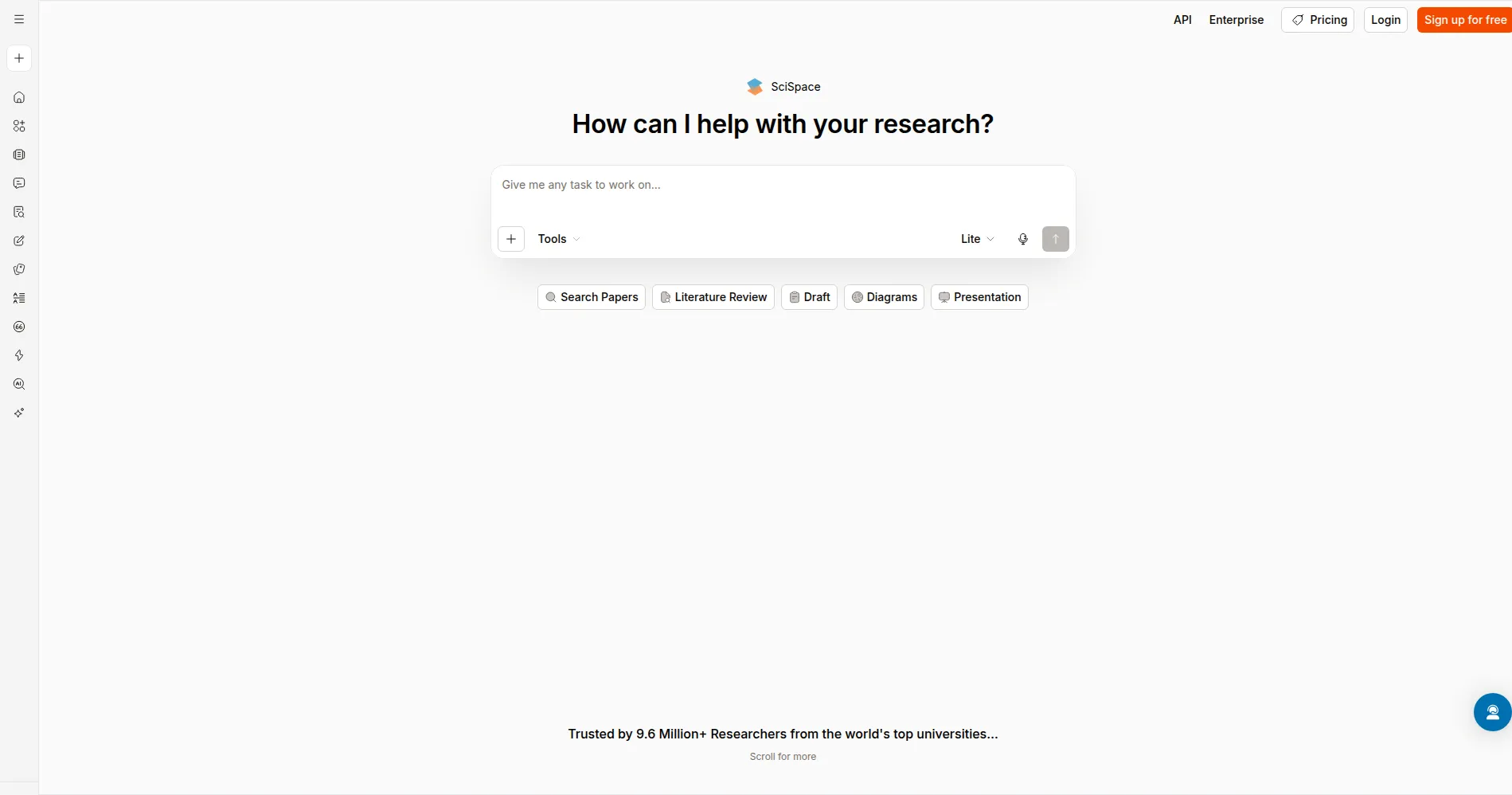
Price: Free Basic plan · Paid from $12/month, billed annually
Free tier
The Basic plan is free and needs no credit card. It includes 100 Agent credits a month, a limited literature review search, and limited chats with papers and summaries. Exports are not included on Basic, so treat it as a reading tool first.
Strengths
- Explains hard sections of a paper in plain words, right where you are reading
- Chat with a PDF: ask questions about the methods, tables, and figures and get answers from the paper itself
- Can also build literature review tables with columns you define
- Premium removes the chat and search limits and unlocks exports
Trade-offs
- The credit system means heavy Agent use runs out fast on the free plan
- It is strongest at the reading stage; discovery and screening are better handled by other tools here
Bottom line
When the papers are found but painful to read, SciSpace is the one to open. It turns a dense PDF into a conversation, which is exactly what a tired researcher needs at the reading stage.
5. ResearchRabbit — Best for Visual Discovery From a Few Key Papers
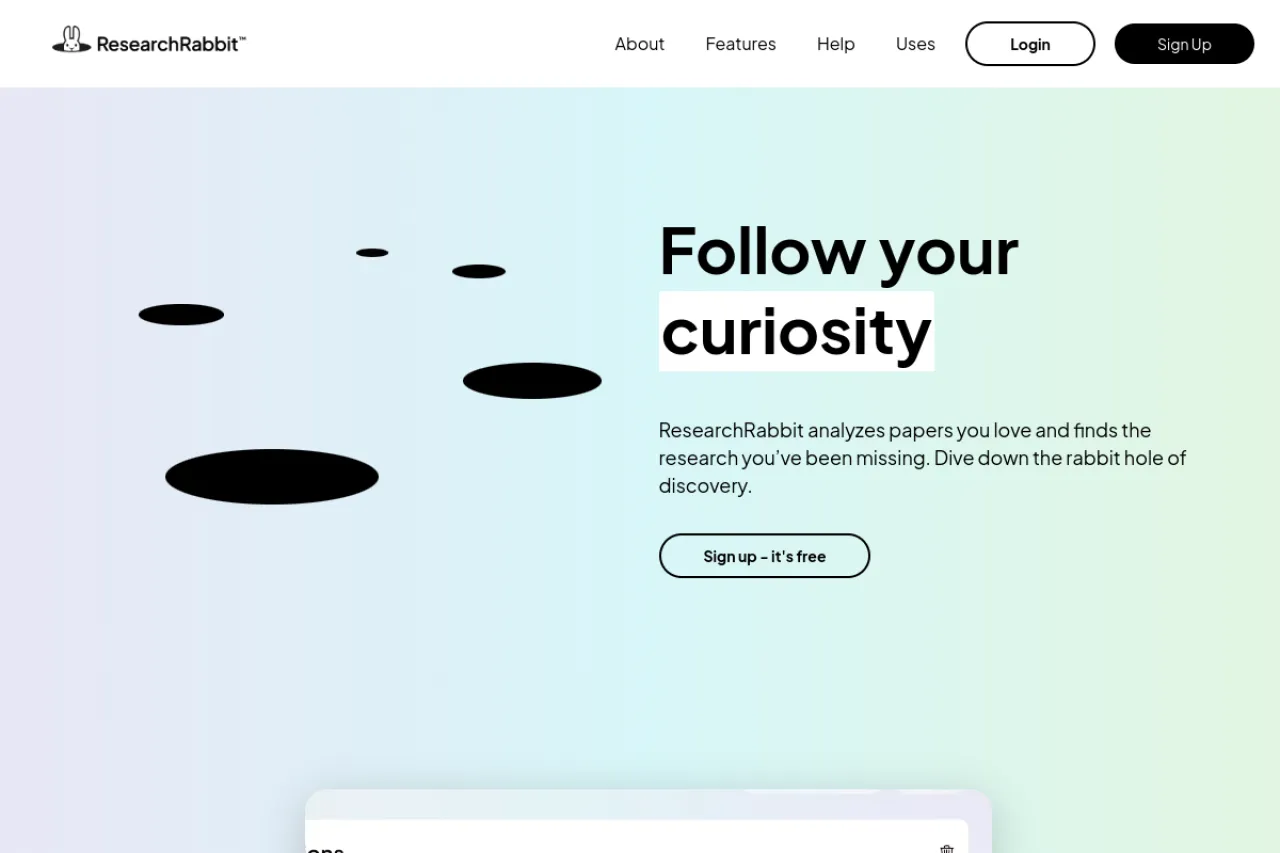
Price: Free forever plan · RR+ from $10/month, billed annually
Free tier
ResearchRabbit is free forever. The free plan gives unlimited searches across more than 310 million articles, unlimited collections, and sharing with collaborators. You can start from up to 50 seed papers — a seed paper is simply a paper you already trust, and the tool finds work connected to it.
Strengths
- Shows your field as a citation graph — a map where each dot is a paper and each line shows which paper cites which
- Finds relevant papers that plain keyword search often misses
- Collections are easy to share with a supervisor or research partner
- The free plan is generous enough to complete a real literature review
Trade-offs
- Discovery only: it does not summarize papers or extract data into tables
- Alerts, advanced search controls, and multiple projects require the RR+ plan
Bottom line
ResearchRabbit is the friendliest free way to explore a new topic. Start with two or three papers you trust, and let the map show you what to read next.
6. Litmaps — Best for Citation Maps You Can Keep Watching
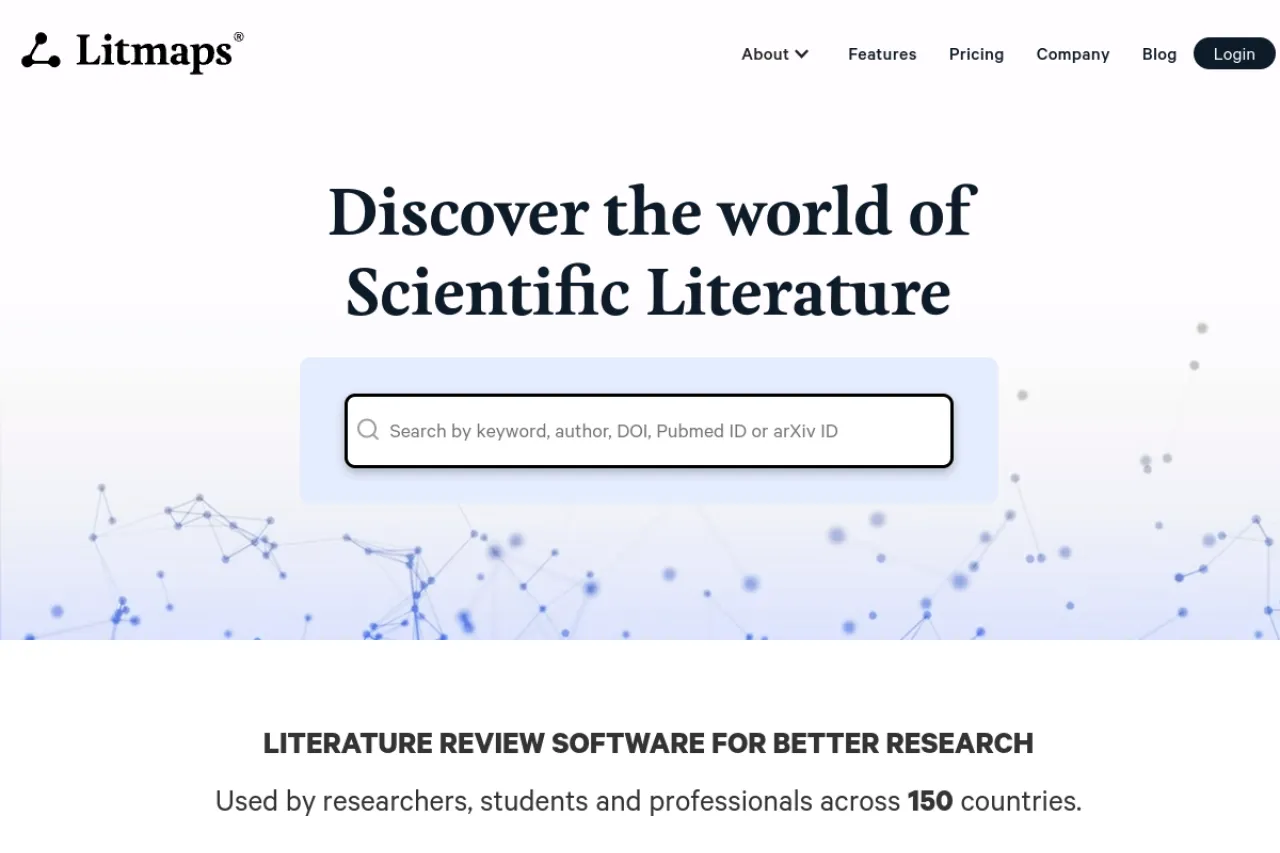
Price: Free plan · Pro from $10/month, billed annually
Free tier
The free plan includes basic search with up to 20 inputs, 2 maps, and up to 100 articles per map. That is enough to map a small, focused topic and see whether the visual way of working suits you.
Strengths
- Maps lay papers out by date and citation counts, so you can see how a field grew and which papers started it
- Pro adds alerts that tell you when new papers match your map, so your review stays current
- Discounts exist for education users and vary by country
Trade-offs
- Free maps are small — a broad topic will outgrow 100 articles quickly
- Team-wide collaboration is a separate plan, not part of Pro
Bottom line
Pick Litmaps when you want one living map of your topic rather than a one-time search. It is built for reviews that run for months and need to stay up to date.
7. Semantic Scholar — Best for Free Academic Search at Scale
Price: Fully free · No paid plan
Free tier
Everything is free. Semantic Scholar is a non-profit project from Ai2, the Allen Institute for AI, and its search and discovery tools are free for the whole research community. It indexes more than 200 million academic papers across all fields of science.
Strengths
- Huge index, so it is a reliable first place to check what exists on a topic
- Short AI summaries help you judge a paper at a glance before you open it
- Citation links let you walk forward and backward through related work
- A free API and open datasets make it a base other tools and projects build on
Trade-offs
- It finds and skims papers — there are no extraction tables, screening workflows, or writing tools
- Summaries are short by design, so key papers still need a full read
Bottom line
Semantic Scholar is the free starting point almost every review can begin with. It will not manage your review for you, but it costs nothing and misses very little.
8. Paperpal — Best for Writing Up and Checking Your Manuscript
Price: Free plan · Prime from £9/month, billed annually
Free tier
Paperpal is a writing workspace, not a search engine. The free plan gives 200 grammar edits a month, 5 uses a day for paraphrase and research questions, and 5 files a month for chat with papers. What the official site does show is the job it is built for: taking a draft from first sources to a submission-ready paper.
Strengths
- Language suggestions are trained on scholarly writing, so fixes sound academic instead of casual
- Citation support covers more than 10,000 styles
- One checker suite covers plagiarism, AI detection, grammar, and a reference check that flags broken or made-up references
- Research questions are answered with cited findings you can save to your library as you write
Trade-offs
- It polishes and checks your writing; discovery and screening belong to the other tools on this list
- Prime costs £9/month, billed annually, and the free plan has small monthly limits
Bottom line
Use Paperpal at the end of the process, when the review is written and needs to be clean, correctly cited, and ready to submit. It is the finishing tool, not the finding tool.
Your situation → best pick
| Your situation | Best pick |
|---|---|
| You need a systematic review with screening and a data table | Elicit |
| You need a fast, cited answer to one science question | Consensus |
| You want to check whether a key paper is supported or disputed | Scite |
| Your papers are found but hard to read | SciSpace |
| You are exploring a new topic from a few trusted papers | ResearchRabbit |
| You want alerts when new papers appear on your topic | Litmaps |
| You have no budget at all | Semantic Scholar |
| Your draft is written and needs checking before submission | Paperpal |
FAQ
What is the best AI tool for a literature review?
Elicit is the best all-round choice for a full literature review, because it can screen thousands of papers and pull their methods and results into one data table. For a quick answer to a single question, Consensus is faster. Most researchers end up using one discovery tool plus one screening tool.
Is there a completely free AI tool for literature reviews?
Yes. Semantic Scholar is fully free with no paid plan, and ResearchRabbit's core discovery is free forever, including unlimited searches and collections. Elicit, Consensus, SciSpace, and Litmaps all offer free plans with real limits. Only Scite has no free plan — it offers a short free trial instead.
Can AI write my literature review for me?
No, and be careful with any tool that promises this. These tools find papers, screen them, summarize them, and organize the facts. The judgment — which studies to trust, how they connect, what the gaps are — is the actual work of a literature review, and it has to come from you.
What is a systematic review, and which tool helps with it?
A systematic review is a literature review that follows fixed, written rules: you define your search terms and inclusion rules in advance, screen every matching paper the same way, and record what you kept and why. Elicit is built for this, with a dedicated workflow that can screen up to 5,000 papers on its Pro plan.
Which tool is best for finding papers I might have missed?
ResearchRabbit and Litmaps are built for this. Both draw a citation graph — a map of which papers cite which — starting from papers you already have. Papers that sit in the middle of your map but are not in your reading list yet are usually the ones your keyword search missed.
Do these tools work for every subject area?
Coverage is strongest in science, medicine, and other fields with large journal literatures, because the tools index published papers. If you work in the humanities or a small niche field, check that the key journals in your area appear in search results before you rely on any single tool.
The honest closing
No tool on this list replaces reading the papers that matter. What the right tool does is remove the slow, mechanical parts — searching, screening, sorting — so your time goes on judgment instead. Start free: Semantic Scholar or ResearchRabbit for discovery, Elicit when the review gets serious, and Paperpal when it is time to write. You can browse more research and writing tools in the Draqee tools directory.